Get in touch
Securing a perimeter often requires a balance between rapid deployment and long-term structural integrity. Whether for a high-traffic construction site or a temporary public event, the choice of fencing can dictate both the safety of the assets and the efficiency of the site management.
The current market for perimeter control is shifting away from permanent, high-cost installations toward modular systems that offer flexibility without sacrificing security. This evolution is driven by the need for reusable assets that can be moved across multiple projects, reducing overall capital expenditure for contractors and industrial operators.
When you decide to buy chain link fence or portable panel systems, understanding the technical specifications and material treatments is critical to ensuring the barrier survives environmental exposure and physical impact.


Modular fencing is designed to solve the conflict between the need for a rigid physical barrier and the requirement for rapid mobility. Unlike traditional fixed fences, these systems rely on a framework of interconnected panels that can be assembled without the need for ground excavation or permanent concrete foundations.
This approach significantly reduces the labor cost and time associated with site setup. By utilizing clamps and couplers, operators can create a seamless perimeter that adapts to uneven terrain or shifting project boundaries, ensuring that security is maintained even as the site footprint evolves.
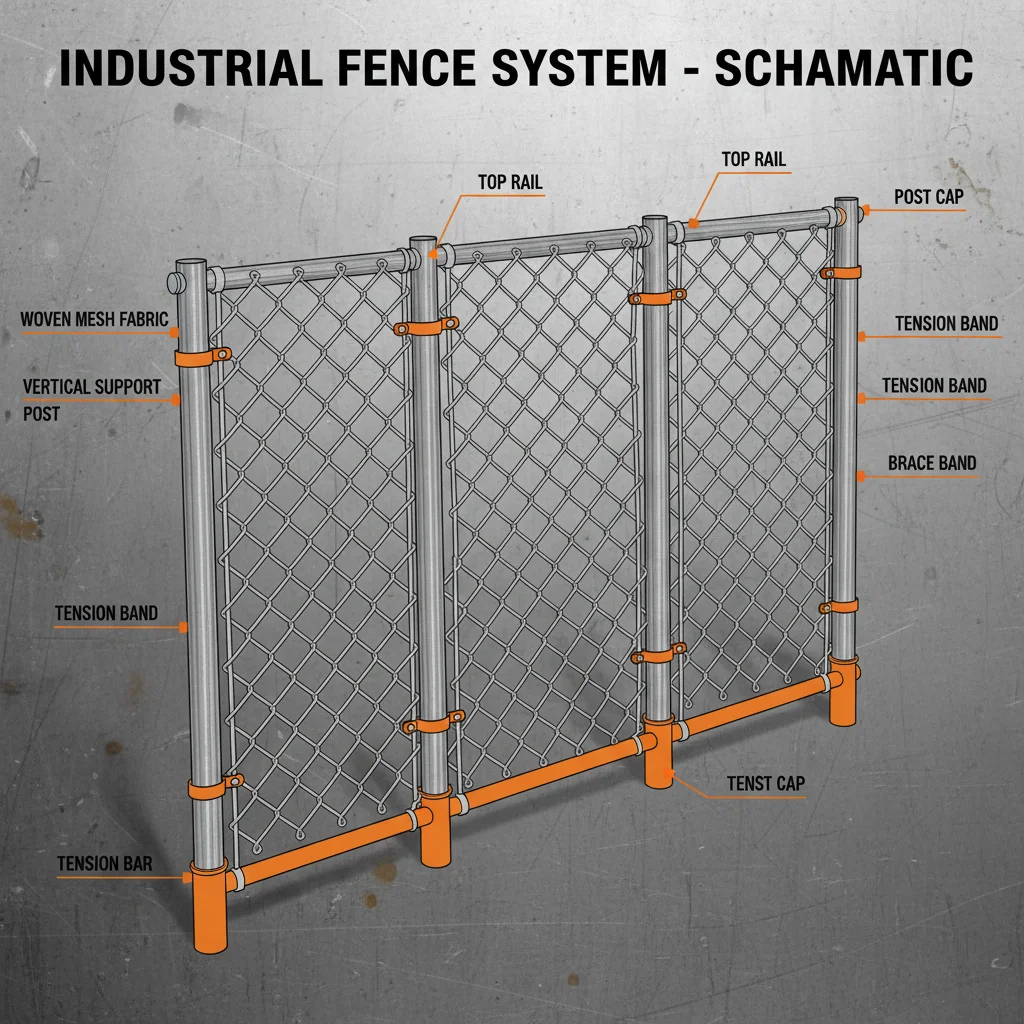
The structural integrity of a temporary panel depends on the synergy between the outer frame and the internal mesh. A strong steel frame provides the necessary rigidity to withstand wind loads and external impacts, while the welded wire mesh infill ensures that the barrier remains impenetrable to unauthorized personnel.
Precision welding is the core of this reliability. By ensuring a consistent weld at every intersection of the mesh and the frame, the panel avoids "weak points" that could lead to structural failure under stress. This engineering allows the panels to be lightweight for transport yet robust enough for industrial-grade site protection.
Furthermore, the integration of specialized bases—either rubber for urban surfaces to prevent damage or concrete for high-stability requirements—allows the system to remain upright without permanent anchoring, facilitating a truly portable security solution.
Since temporary fences are exposed to the elements across multiple projects, the choice of surface treatment is the primary determinant of the product's lifecycle. Raw steel is susceptible to rapid oxidation, which compromises both the aesthetic and the structural strength of the mesh.
The application of hot-dip galvanizing or high-grade powder coating creates a sacrificial or barrier layer that prevents rust, ensuring that the fencing remains reusable over several years of deployment in diverse climatic conditions.
Cowan Machinery Manufacturing Co., Ltd. implements these in-house surface-treatment processes, utilizing precision roll-forming and PLC-controlled systems to ensure a uniform coating. This technical rigor ensures that the panels do not flake or peel, which is essential for maintaining a professional appearance on public-facing project sites.
Different environments place varying demands on a fencing system. A construction site requires high impact resistance and anti-climb features, whereas a public event may prioritize rapid assembly and a cleaner visual profile to manage crowd movement.
Evaluating the suitability of a panel involves analyzing its relative performance in stability, ease of installation, and durability. The following index provides a qualitative assessment of how different configurations perform against common site requirements.
In a typical industrial setting, such as a roadwork project, the priority is often the restriction of unauthorized access to protect both workers and the public. Here, temporary fence panels are deployed in straight lines with lockable gates at access points, allowing for controlled movement of machinery and personnel without hindering project timelines.
Conversely, in crowd control environments for public events, the focus shifts to adaptability. The ability to quickly configure corners and create temporary walkways using lightweight panels and rubber bases ensures that pedestrian flow is managed efficiently without causing permanent damage to the venue's flooring or landscaping.
The industry is moving toward a more integrated approach to security. While the physical barrier remains the first line of defense, there is a growing trend toward augmenting these panels with privacy screens and anti-climb mesh to meet stricter safety regulations and reduce visual pollution on urban sites.
Sustainability is also becoming a key procurement driver. The shift from single-use materials to high-durability, reusable steel panels reflects a broader industry goal to reduce waste. By investing in products with superior galvanizing, companies can amortize the cost of the fence over multiple projects.
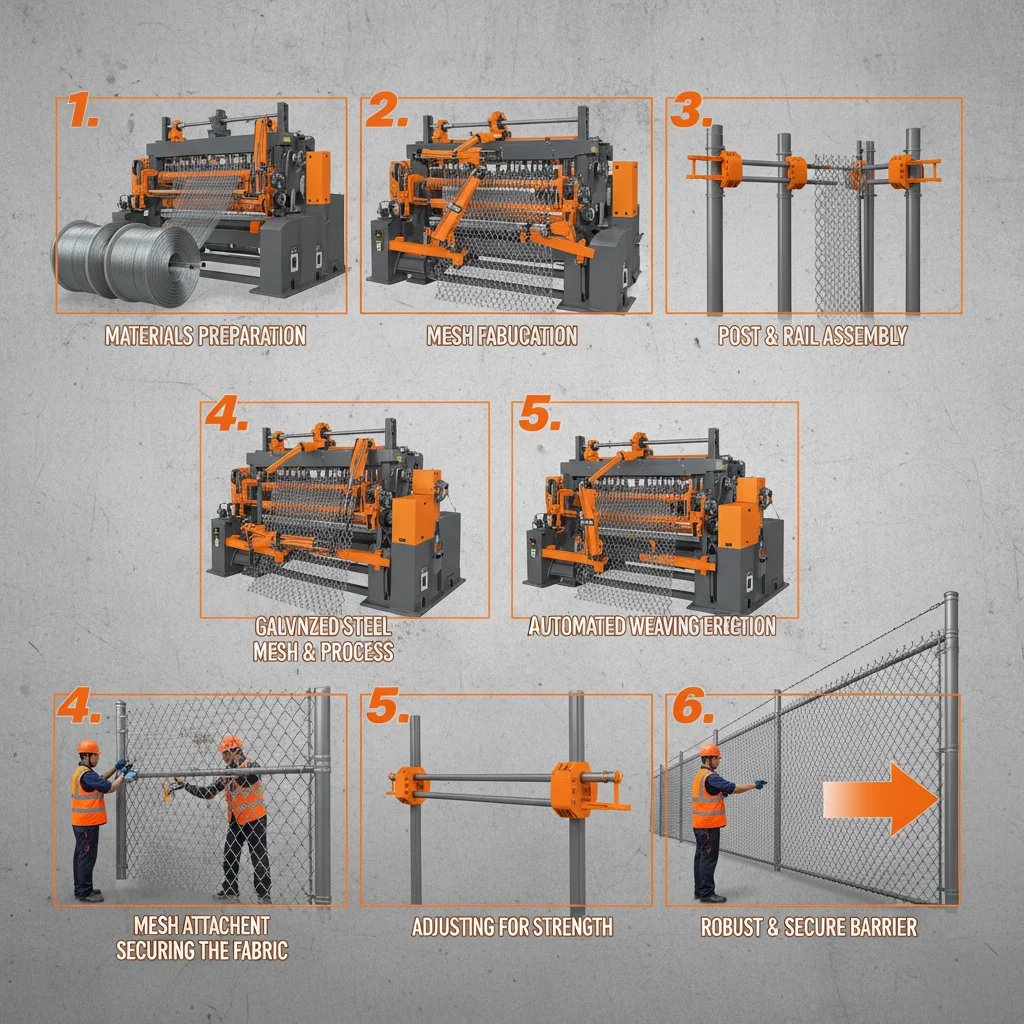
Automation in the manufacturing process, such as the use of self-developed PLC control systems, is allowing for higher precision in panel dimensions. This ensures that when you buy chain link fence components or panels, the fit is perfect, reducing installation time and eliminating gaps in the perimeter.
Selecting the right fencing solution requires a trade-off analysis between cost, duration of use, and the required security level. A low-cost, lightly coated fence may suffice for a two-week event, but it will fail quickly if used on a year-long construction project in a coastal environment.
The primary evaluation factors should include the type of finish (hot-dip galvanized vs. powder coated), the gauge of the steel frame, and the availability of modular accessories. These variables determine whether the fence provides a genuine barrier or merely a visual boundary.
The following framework provides a relative suitability guide for choosing between different fencing options based on the specific operational requirements of the site.
| Scenario | Priority Factor | Recommended Finish | Relative Suitability |
|---|---|---|---|
| Urban Construction | Security/Speed | Galvanized Steel | High |
| Public Events | Portability/Aesthetics | Powder Coated | High |
| Industrial Zones | Impact Resistance | Hot-Dip Galvanized | Extreme |
| Coastal Roadworks | Corrosion Control | PVC/Heavy Galv | High |
| Short-term Events | Low Initial Cost | Standard Coating | Moderate |
| Permanent Boundary | Longevity/Stability | Custom Powder Coat | Low (Use Fixed) |
A modular temporary fence panel is characterized by its ability to be quickly assembled and disassembled using a standardized frame and connection system, such as clamps or couplers. Unlike permanent fences, these do not require ground excavation or permanent foundations, making them highly portable and reusable across various project sites.
Hot-dip galvanizing involves coating the steel in a layer of zinc, which acts as a sacrificial anode. This prevents the underlying steel from oxidizing (rusting) even when exposed to rain, humidity, and salt air. For temporary panels that are stored outdoors and moved between sites, this finish is essential for maintaining structural integrity over several years.
Yes, the modular nature of the panels allows them to be configured in various layouts. By using adjustable clamps and choosing between different base types (rubber or concrete), the fencing can be aligned to follow the contours of the ground, ensuring there are no gaps that could compromise security.
Galvanizing provides superior corrosion protection and is typically used for heavy industrial or long-term temporary use. Powder coating offers a wide range of colors and a smoother finish, making it ideal for public events or sites where corporate branding and aesthetics are a priority, although it may be more prone to chipping under heavy impact.
For short-to-medium term projects, they are significantly more cost-effective because they eliminate the costs of excavation, concrete pouring, and eventual demolition. Furthermore, because they are reusable, the initial investment is spread across multiple projects, lowering the total cost of perimeter control over time.
Security can be scaled using anti-climb mesh to prevent intruders from scaling the fence, lockable gates for controlled access, stabilizer bars for increased wind resistance in open areas, and privacy screens to block the view of sensitive equipment or materials from the public.
Effective perimeter control is no longer just about the height of the barrier, but about the efficiency of its deployment and the longevity of its materials. The transition toward modular, corrosion-resistant panel systems allows operators to maintain high security standards while drastically reducing the time and labor required for site setup.
By prioritizing technical factors such as precision welding and advanced surface treatments, businesses can ensure their fencing assets provide reliable protection across multiple project lifecycles. Whether the goal is simple crowd management or high-security industrial isolation, a well-selected modular system provides the optimal balance of strength, flexibility, and value.

If you are interested in our products, you can choose to leave your information here, and we will be in touch with you shortly.