High-Performance interlink wire fence Solutions for Germany's Infrastructure

Precision-engineered fencing machinery and materials tailored for the rigorous industrial standards of the German manufacturing sector.

High-Performance interlink wire fence Solutions for Germany's Infrastructure

Integrating advanced metallurgy and automated weaving technology to deliver high-durability fencing solutions that meet DIN standards across Germany.

Industrial Fencing Landscape in Germany

Analyzing the demand for high-precision barrier systems in Europe's industrial heartland.

Germany's commitment to "Industrie 4.0" has significantly influenced the production of specialized machinery. In the context of security infrastructure, the demand for a durable iron chain link fence has evolved from simple boundary marking to high-tension, corrosion-resistant security systems capable of withstanding the humid and temperate climate of Central Europe.

Economic shifts toward sustainable urban development in cities like Berlin and Munich have increased the requirement for aesthetically pleasing yet functional garden chain link fence options. These systems must balance the strict German zoning laws with the technical necessity for longevity and low maintenance.

Furthermore, the industrial sector heavily scrutinizes the gi wire fencing cost versus long-term lifecycle value. German procurement focuses on galvanized coatings that prevent oxidation, ensuring that the initial investment in machinery and material yields decades of service without structural degradation.
Technical Evolution and Development Trajectory

From manual weaving to fully automated CNC-driven fencing production.

Market Development History

Prior to the 1990s, fencing production in Germany relied heavily on semi-automatic looms. The focus was primarily on basic structural integrity, where standard iron chain link fence types dominated the agricultural and mining sectors due to their availability and simple manufacturing process.

Between 2000 and 2015, the industry transitioned toward high-precision galvanization and automated tensioning. The introduction of PLC-controlled machinery allowed for the mass production of interlink wire fence systems with exact mesh dimensions, reducing material waste and improving the structural uniformity required for industrial safety certifications.

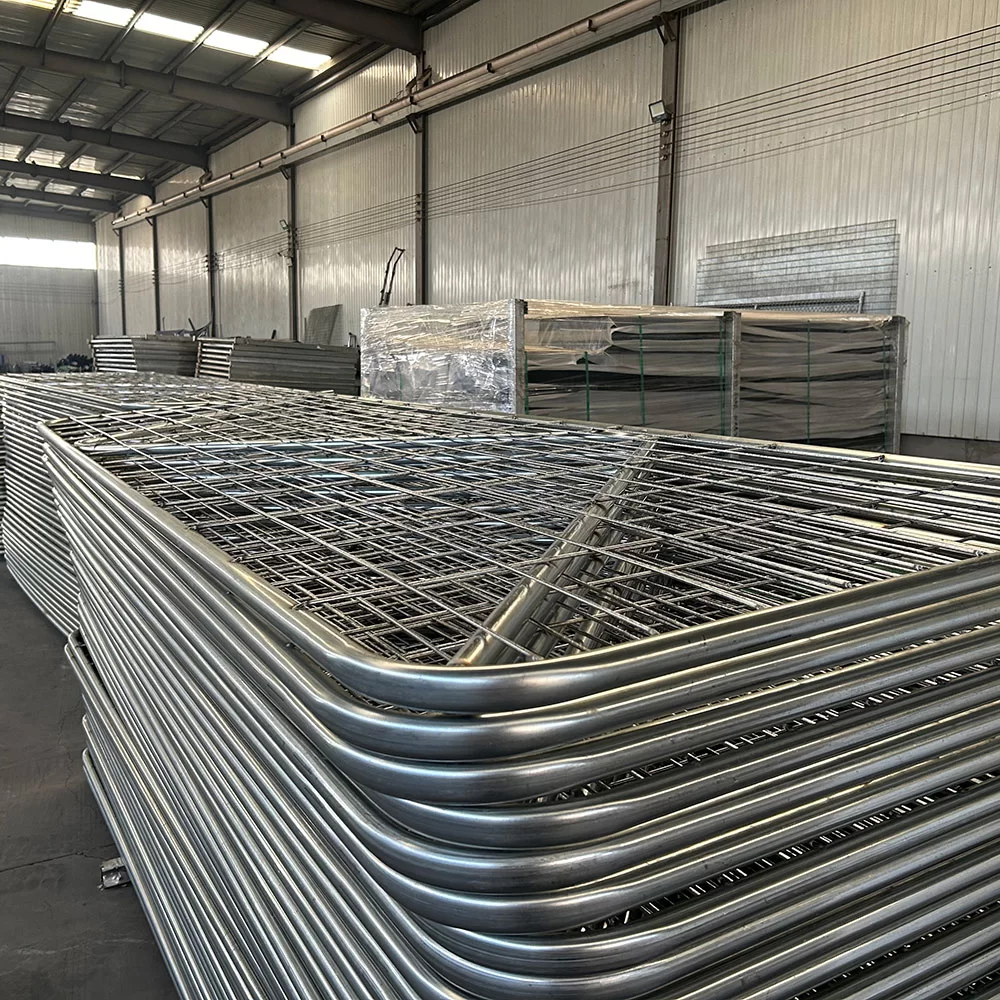
From 2016 to the present, the integration of AI-driven quality control and laser-cutting technology has enabled the creation of complex components, such as the large chain link fence gate, which now features integrated locking mechanisms and reinforced frame structures designed for heavy-duty industrial access.

Future Development Trends

Eco-Friendly Coating Technologies

Driven by EU environmental regulations, there is a shift toward zinc-aluminum-magnesium (ZAM) coatings to replace traditional galvanization, further reducing the long-term gi wire fencing cost by extending service life.

Smart-Fencing Integration

Integration of IoT sensors into the fence fabric to detect intrusions or structural failures in real-time, transforming passive barriers into active security assets.

Modular Rapid-Deployment Systems

Development of tool-less assembly mechanisms for the garden chain link fence market to cater to the increasing demand for rapid residential security installation.

Industry Outlook and Strategic Foresight

Predicting the trajectory of specialized fencing machinery in the European market.

Automation Acceleration
Shift toward fully autonomous weaving lines that minimize human error and maximize output for interlink wire fence production.
Material Science Innovation
Adoption of high-tensile alloy wires that reduce the total weight of the iron chain link fence without sacrificing strength.
Customized Modularization
Increased demand for tailored large chain link fence gate systems that integrate with existing security software.
Sustainability Mandates
Optimizing the gi wire fencing cost by implementing closed-loop recycling of galvanized scrap.

Industry Outlook

Based on Google search trends for industrial security in Germany, there is a significant increase in queries related to "high-security perimeter fencing." This indicates a shift from simple boundary markers to sophisticated barrier systems that integrate physical strength with digital monitoring.

We predict that over the next 3-5 years, the German market will prioritize "Total Cost of Ownership" (TCO) over initial procurement costs. This will drive demand for machinery that can produce ultra-durable, low-maintenance interlink systems that reduce long-term operational expenditure.

Localized Application Scenarios in Germany

Practical deployments of our fencing technology across diverse German environments.

01. Automotive Plant Perimeters

Implementation of high-tension interlink wire fence systems around large-scale manufacturing plants in Stuttgart, ensuring secure boundaries that meet rigorous industrial safety standards.

02. Residential Green Zones

Deploying specialized garden chain link fence solutions in suburban areas of Hamburg, focusing on weather-resistant coatings that withstand North Sea salt spray.

03. Logistic Hub Access Control

Installation of heavy-duty large chain link fence gate systems for distribution centers in Frankfurt, designed for high-frequency truck traffic and integrated security locks.

04. Mining and Quarry Site Security

Using reinforced iron chain link fence structures to secure hazardous zones in the Ruhr region, preventing unauthorized entry into deep-excavation areas.

05. Municipal Infrastructure Projects

Large-scale deployment of galvanized systems where the gi wire fencing cost is optimized through bulk production machinery for public park and utility plant boundaries.

Brand Story

Global Development History of Anping County Kewang Machinery Manufacturing Co., Ltd.

Foundational Excellence

Established with a mission to solve the inefficiency of manual weaving in the fencing industry, focusing on precision engineering for the global market.

Technological Breakthrough

Developed the first generation of high-speed automatic chain link machines, drastically reducing the production time for interlink systems.

European Expansion

Entered the German market by aligning machinery output with DIN standards, proving that high-efficiency manufacturing can meet the world's strictest quality requirements.

Smart Manufacturing Era

Integrated PLC and CNC technology into our production lines, allowing for unprecedented customization of fence mesh and gate dimensions.

Sustainability Leadership

Now leading the industry in energy-efficient machinery, reducing the carbon footprint of fence production while maintaining peak structural performance.

Comprehensive Fencing Product Portfolio for Germany

A complete range of machinery and materials designed for European industrial applications.

Frequently Asked Questions in Germany

Technical insights and commercial guidance for the German fencing market.

How does the climate in Germany affect the choice of gi wire fencing cost?

Germany's moisture and temperature fluctuations require hot-dip galvanization. While this might increase the initial gi wire fencing cost, it prevents premature corrosion, which is critical for maintaining the structural integrity of industrial perimeters.

What are the best options for a garden chain link fence in residential areas?

For German residential zones, we recommend PVC-coated garden chain link fence systems. These provide a softer aesthetic and additional protection against the elements, blending functionality with the local landscape requirements.

Can an interlink wire fence meet industrial safety certifications in Europe?

Yes, our interlink wire fence systems are manufactured using high-tensile steel and precision weaving, ensuring they meet the load-bearing and safety standards required for industrial zoning in Germany.

What is the lifespan of a heavy-duty iron chain link fence?

Depending on the coating, a professional iron chain link fence can last between 20 to 50 years in the German environment, provided that the galvanization layer is applied uniformly via automated machinery.

How to determine the size for a large chain link fence gate?

Sizing for a large chain link fence gate depends on the vehicle access requirements of your facility. We recommend analyzing the turning radius of the largest transport vehicles to ensure seamless entry and exit.

Are there sustainable alternatives to traditional zinc coatings?

Yes, the industry is moving toward ZAM (Zinc-Aluminum-Magnesium) coatings. These are more environmentally friendly and offer superior protection in high-corrosion areas compared to standard galvanized wire.

Consult Our Engineering Experts

Ready to optimize your infrastructure with German-standard precision? Contact our specialists today for a tailored solution in Germany.

Contact Us Now

If you are interested in our products, you can choose to leave your information here, and we will be in touch with you shortly.