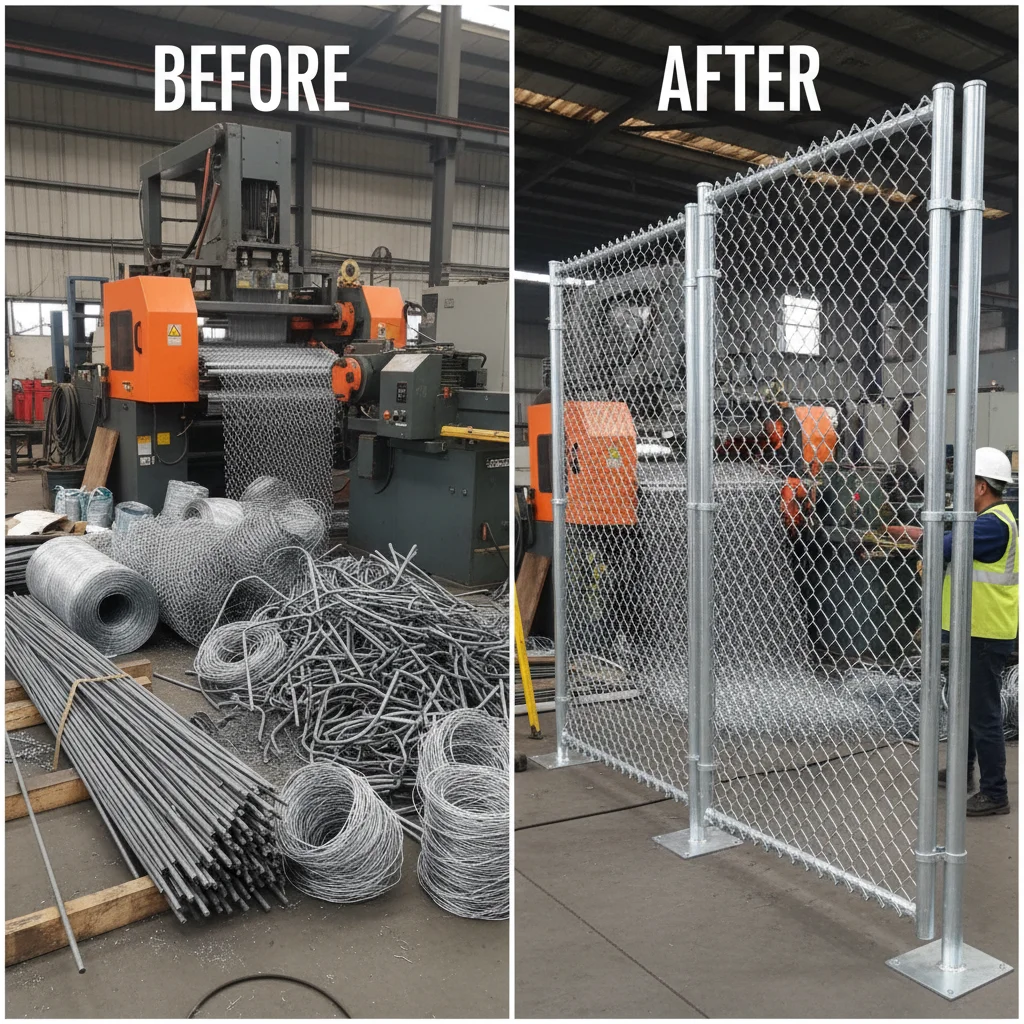
When planning a large-scale enclosure, understanding the chain link fence cost for 1 acre is a critical first step for any landowner or agricultural manager. An acre provides significant space, but the cost of securing it depends heavily on the perimeter layout, the grade of materials used, and the specific security requirements of the site. Whether you are securing livestock or creating a boundary for industrial equipment, a well-calculated budget ensures long-term structural integrity.
Global trends in land management highlight a shift toward high-durability materials that reduce lifetime maintenance costs. For those analyzing the chain link fence cost for 1 acre, the focus is no longer just on the initial purchase price, but on the "cost per year of service." This involves evaluating galvanized coatings and mesh strength to prevent premature failure in harsh environmental conditions.
Integrating high-quality access points, such as specialized farm gates, is often the most overlooked variable when calculating the chain link fence cost for 1 acre. Ensuring that these gates are corrosion-resistant and safe for animals prevents costly repairs and injuries, transforming a simple boundary into a comprehensive asset management system.

Global Industry Context of Fencing Costs
The global demand for secure land perimeters has surged as agricultural expansion and industrial zoning increase. When analyzing the chain link fence cost for 1 acre, industry data suggests that material costs fluctuate based on global steel indices and galvanization standards. Ensuring compliance with ISO standards for corrosion resistance is now a priority for international projects to avoid frequent replacements.
Modern challenges include managing soil acidity and weather extremes, which can degrade standard fencing rapidly. By investing in hot-dip galvanized materials, landowners can mitigate the risk of rust and structural failure, ensuring that the initial budget allocated for a one-acre perimeter provides a decade or more of reliable service.
Defining the Parameters of 1 Acre Fencing
To accurately define the chain link fence cost for 1 acre, one must first understand that "one acre" is a measure of area, not perimeter. Depending on whether the plot is a perfect square or a narrow rectangle, the total linear footage of fencing required can vary significantly, directly impacting the total material cost.
In a modern industrial context, this calculation involves more than just the wire mesh. It includes the cost of tension wires, terminal posts, and specifically designed access points. For those using the area for livestock, the inclusion of safety-focused gates with no sharp edges is a non-negotiable requirement to prevent animal injury.
Ultimately, the definition of cost for a one-acre project is a composite of material quality (such as the thickness of the galvanization) and the complexity of the terrain. A flat plot will always have a lower installation cost than a rocky or sloped acre, which may require additional bracing and labor.
Core Components Influencing Material Longevity
The durability of a fence is dictated by its smallest weak point. When evaluating the chain link fence cost for 1 acre, the quality of the infill mesh is paramount. High-strength mesh ensures that the structure can withstand external pressure from wind or animals without sagging or breaching.
A key factor in longevity is the application of hot-dip galvanization. By treating the steel inside and out, the fence becomes resistant to oxidation and corrosion. While this may slightly increase the immediate chain link fence cost for 1 acre, it eliminates the need for frequent painting or chemical treatments.
Furthermore, the safety of the hardware is essential. Professional-grade gates are engineered with no sharp edges, ensuring safety for both human operators and livestock. For horse farms, specialized gates with smaller openings are used to prevent legs from getting stuck, which is a common flaw in traditional, cheaper farm gates.
Economic Analysis of Installation Methods
Comparing the economic impact of different installation strategies is vital for budgeting. The chain link fence cost for 1 acre can be optimized by choosing between DIY installation and professional contracting. While professional installation costs more upfront, the precision in tensioning the mesh prevents long-term sagging and structural failure.
Another economic variable is the choice of gate sizes, ranging from 900mm to 2400mm. Selecting the correct size for the intended vehicle or animal traffic reduces the wear and tear on the fence line, thereby preserving the initial investment of the one-acre enclosure.
Comparison of Efficiency vs. Chain Link Fence Cost for 1 Acre
Global Applications in Agricultural Zones
In remote industrial zones and large-scale farms, the application of a secure perimeter is a matter of operational safety. The chain link fence cost for 1 acre is often weighed against the potential loss of livestock or the theft of expensive machinery. In these contexts, high-strength infill mesh is the standard for ensuring that the boundary remains impenetrable.
Specifically, in horse breeding facilities, the integration of specialized safety gates is crucial. Because horses are prone to getting limbs stuck in larger gaps, the use of smaller-opening mesh in gates ensures that the livestock remains unharmed, proving that a higher initial investment in quality leads to lower veterinary costs and higher animal welfare.
Long-term Value and Sustainability Benefits
The long-term value of a fencing project is found in its sustainability. When calculating the chain link fence cost for 1 acre, the use of hot-dip galvanized steel is a sustainable choice. This process creates a metallurgical bond that prevents rust, meaning the fence does not need to be replaced every few years, reducing the amount of steel waste entering the environment.
From a logical standpoint, the reliability of the structure provides peace of mind for the owner. Knowing that there are no sharp edges to injure animals and that the mesh is durable enough to withstand the elements creates a professional and safe environment for livestock management.
Moreover, the versatility of gate sizes (900mm to 2400mm) allows the fence to evolve with the farm's needs. As equipment grows in size, the ability to integrate wider gates without replacing the entire perimeter adds significant functional value to the original investment.
Innovations in Protective Boundary Systems
The future of boundary systems lies in the marriage of material science and ergonomic design. The evolution of the chain link fence cost for 1 acre now includes considerations for automation and smarter material coatings that react to environmental stressors.
One major innovation is the shift toward "animal-centric" engineering. This is evident in the design of Horse Farm gates, where the focus is on eliminating "trap points" that cause injury. By refining the opening size and removing all sharp edges, manufacturers are creating a safer intersection between infrastructure and nature.
As digital transformation hits the agricultural sector, we expect to see integrated sensors within the fence line to monitor perimeter breaches. While this will shift the cost structure, the core requirement remains high-quality, galvanized steel that can support these new technologies.
Analysis of Fencing Material Specifications and Cost Impact
| Material Grade | Corrosion Resistance | Safety Rating | Estimated Lifespan |
|---|
| Standard Steel | Low | Moderate | 5-8 Years |
| Galvanized (Single) | Medium | High | 10-15 Years |
| Hot-Dip Galvanized | Very High | Very High | 20+ Years |
| PVC Coated | High | High | 15-20 Years |
| Industrial Mesh | High | Moderate | 15-25 Years |
| Animal-Safe Grade | Very High | Maximum | 20+ Years |
FAQS
The cost is calculated based on the linear footage of the perimeter (which varies by the shape of the acre), the gauge of the wire mesh, the type of coating (such as hot-dip galvanization), and the number of gates required. Additionally, labor and terrain complexity play a role in the final price.
Hot-dip galvanizing ensures that the fence is coated inside and out, providing superior corrosion resistance compared to standard coatings. This significantly extends the lifespan of the fence, especially in humid or coastal areas, reducing long-term maintenance costs.
Yes, our specialized Horse Farm gates are designed with smaller openings to prevent animals from getting their legs stuck. Furthermore, all gates are manufactured with no sharp edges to ensure the safety of both animals and handlers.
We offer a wide range of sizes to fit different needs, from small pedestrian access gates of 900mm up to large vehicle or livestock access gates of 2400mm, ensuring your perimeter remains functional and secure.
Infill mesh provides the core structural strength of the fence. High-quality infill ensures that the fence can resist impacts and pressure without stretching or breaking, which is critical for securing livestock or preventing intruders on a large plot of land.
Absolutely. With sizes ranging from 900mm to 2400mm and various mesh densities available, our gates can be integrated into any one-acre layout to balance accessibility with maximum security and safety.
Conclusion
Investing in a secure boundary involves a careful balance between the initial chain link fence cost for 1 acre and the long-term operational value it provides. By prioritizing hot-dip galvanized materials, high-strength infill mesh, and safety-engineered gates, landowners can ensure a durable, corrosion-resistant system that protects both assets and livestock.
As the industry moves toward more sustainable and animal-safe designs, the focus must remain on quality over the lowest price. We recommend conducting a full site survey to determine the exact linear footage and selecting materials that match the environmental stressors of your region to maximize the return on your investment. Visit our website: www.cowanfences.com