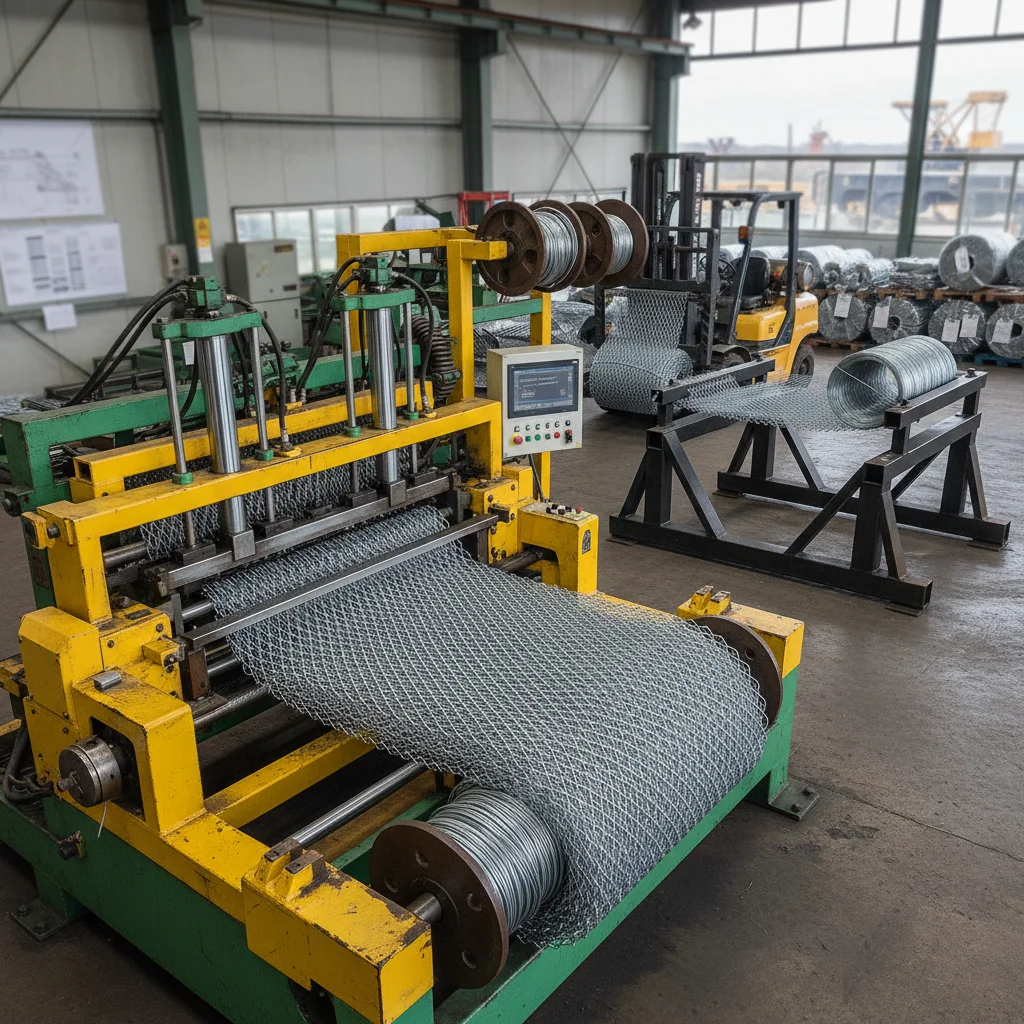
Modern agricultural boundary management requires a sophisticated balance between structural rigidity and cost-efficiency to ensure livestock safety. The implementation of a professional-grade containment system, often compared to the versatility of a 10 chain link fence, provides the necessary security for cattle and sheep while resisting the harsh pressures of outdoor environments.
Selecting the right materials is critical for long-term sustainability in farming, where environmental stressors like humidity and soil acidity can quickly degrade inferior products. High-tensile steel and hot-dip galvanization have emerged as the gold standard, offering a level of durability and tensile strength that far surpasses traditional wooden or standard wire options.
By integrating strategic mesh designs with heavy-duty anchoring, farmers can achieve rapid deployment and ultra-low maintenance. Whether you are managing a large-scale ranch or a small livestock plot, understanding the technical advantages of a 10 chain link fence style of security ensures your investment provides a permanent solution for herd management.

Global Industry Context of 10 Chain Link Fence
On a global scale, the demand for high-durability livestock containment is rising as agricultural operations modernize to meet ISO standards for animal welfare and land management. The shift toward high-tensile materials reflects a broader industry trend where efficiency and longevity are prioritized over low initial costs, mirroring the structural reliability found in a 10 chain link fence.
Many regions now face the challenge of managing livestock on uneven or rolling terrain, where traditional concrete foundations are too expensive and labor-intensive. The adoption of direct-drive post systems combined with woven high-tensile wire allows for rapid deployment, reducing installation downtime and labor costs significantly across large-scale pasture projects.
Defining the 10 Chain Link Fence Concept
In the context of professional livestock containment, a 10 chain link fence conceptualization refers to a system that prioritizes high tensile strength and structural integrity. While traditional chain link is used for security, the field-grade version utilizes graduated woven mesh and T-shaped rigid steel posts to create a barrier that is both flexible enough to absorb impact and rigid enough to prevent breaches.
This system is engineered specifically for the rigorous demands of modern agriculture, integrating hot-dip galvanized coatings to combat oxidation. By combining the strength of high-tensile steel with a design that allows for direct ground driving, it addresses the humanitarian and industrial need for secure, low-maintenance boundary control in remote rural areas.
Essentially, the "10" in this context symbolizes a top-tier rating of performance, where the fence is expected to withstand heavy animal pressure without permanent deformation. This makes it an essential tool for cattle ranches, sheep farms, and horse pastures that require a dependable perimeter without the constant need for repair.
Core Components of High-Tensile Fencing
The foundation of a high-performance system like the 10 chain link fence is the high-tensile steel wire. Unlike standard mild steel, high-tensile wire can be stretched tighter and resists sagging, ensuring that the fence line remains uniform across miles of terrain.
Central to the containment efficiency is the graduated mesh design. By featuring smaller openings at the bottom and larger ones at the top, the 10 chain link fence prevents smaller calves or goats from escaping while optimizing material use for larger cattle.
Complementing the wire are the T-shaped rigid steel posts (TY posts), which provide superior ground anchoring. These posts eliminate the need for concrete, allowing the 10 chain link fence to be installed rapidly even in humid or high-exposure environments.
Practical Global Applications and Use Cases
Across the globe, this fencing technology is deployed in diverse environments, from the rolling hills of New Zealand sheep farms to the vast cattle ranches of North America. The ability of the 10 chain link fence system to adapt to uneven terrain makes it the preferred choice for rotational grazing, where semi-permanent paddocks must be established quickly to promote pasture recovery.
In remote industrial zones or border control areas, these systems are used to define clear perimeters that protect valuable land assets from wandering livestock or unauthorized access. The rapid deployment capability is especially critical in post-disaster recovery or newly developed agricultural zones where time and labor are the most constrained resources.
Performance Metrics of 10 Chain Link Fence Systems
Long-Term Value and Sustainability
The economic value of investing in a 10 chain link fence system is realized over the entire life cycle of the installation. Unlike wooden posts that rot or termite-prone concrete structures, hot-dip galvanized steel offers an extended lifespan, significantly reducing the frequency of replacement cycles and the associated labor costs.
From a sustainability perspective, the reduction in material waste and the avoidance of carbon-heavy concrete foundations make this system an eco-friendly alternative. The long-term reliability provides farmers with peace of mind, knowing their livestock is secure and their land is managed with an innovative, low-impact boundary solution.
Future Innovations in Fence Technology
The future of the 10 chain link fence concept is leaning toward the integration of "smart" farming technology. We are seeing a rise in the use of conductive high-tensile wires that can be easily electrified, allowing for dynamic herd management and automated alerts when a breach in the perimeter is detected.
Advancements in metallurgy are also producing new alloy coatings that offer even higher corrosion resistance than traditional galvanization, specifically for coastal areas with high salinity. These innovations ensure that the structural integrity of the fence remains uncompromised even in the most aggressive chemical environments.
Furthermore, the shift toward automation in installation is reducing the physical burden on workers. Specialized post-driving machinery is being developed to integrate perfectly with T-shaped posts, further accelerating the deployment of large-scale fencing projects across thousands of acres.
Challenges and Expert Solutions
One common challenge in fencing is the tendency of standard wires to stretch or deform under the weight of leaning livestock. The solution is the application of high-tensile steel used in the 10 chain link fence system, which allows the wire to absorb impact and spring back to its original tension, preventing the fence from sagging over time.
Another limitation is installation on rocky or frozen soil, where direct driving can be difficult. Expert installers recommend using a combination of heavy-duty pneumatic drivers and strategic post spacing to maintain tension and stability, ensuring the fence remains rigid regardless of the ground composition.
Finally, maintenance in humid climates often leads to rust at the joints. By utilizing hot-dip galvanization—where the steel is submerged in molten zinc—the entire surface of the wire and post is protected, creating a chemical barrier that prevents oxidation and ensures a lifespan that far exceeds traditional options.
Comparative Analysis of 10 Chain Link Fence vs. Traditional Systems
| System Type | Installation Speed | Lifespan Score (1-10) | Maintenance Requirement |
|---|
| Traditional Wood Fence | Slow (Digging/Concrete) | 4 | High (Rot/Termites) |
| 10 Chain Link Style (Steel) | Rapid (Direct Drive) | 10 | Ultra-Low |
| Standard Mild Steel | Moderate | 6 | Medium (Rust issues) |
| Concrete Post System | Very Slow | 8 | Low (But brittle) |
| Electric Poly-Wire | Very Rapid | 3 | Daily Check-ups |
| Hybrid High-Tensile | Rapid | 9 | Very Low |
FAQS
High-tensile steel provides significantly greater strength and flexibility, allowing the fence to absorb heavy impacts from leaning livestock without permanently deforming. This prevents the sagging common in standard steel, maintaining a tight, secure perimeter that lasts longer and requires far less tensioning over time.
TY posts are made of galvanized steel, meaning they do not rot, suffer from termite damage, or decay in humid soil. They can be driven directly into the ground without concrete, which drastically reduces installation time and labor costs while providing superior rigidity and anchoring against animal pressure.
The graduated mesh features smaller openings at the bottom and larger ones at the top. This specifically prevents smaller animals, such as goats or calves, from squeezing through the bottom of the fence, while the larger top mesh efficiently contains cattle without wasting expensive material.
Yes, the T-shaped profile of the TY posts provides excellent ground-holding capability and stability. Because they do not require flat concrete bases, they can be driven directly into rolling or hilly terrain, ensuring a consistent and secure barrier regardless of the landscape's contours.
Hot-dip galvanization involves coating the steel in a thick layer of zinc. This creates a metallurgical bond that prevents oxidation and rust. Even in humid, rainy, or coastal environments, this protective barrier ensures the fence remains structurally sound and avoids the corrosion that typically destroys untreated steel.
The field fence rolls are fastened to the TY posts using specialized steel clips or heavy-duty tying wire. This method maintains a tight, uniform fence line and ensures constant tension across the entire perimeter, preventing the mesh from pulling away from the posts under pressure.
Conclusion
The implementation of a high-tensile system, embodying the reliability of a 10 chain link fence, represents a strategic investment in agricultural infrastructure. By combining the strength of galvanized steel, the efficiency of TY posts, and a graduated mesh design, farmers can achieve a low-maintenance, high-durability boundary that secures livestock and optimizes land use.
As global farming moves toward greater sustainability and automation, choosing materials that minimize replacement cycles and labor costs is essential. We recommend transitioning from traditional wood or mild steel to high-tensile solutions to ensure long-term operational stability and superior herd containment. Visit our website: www.cowanfences.com