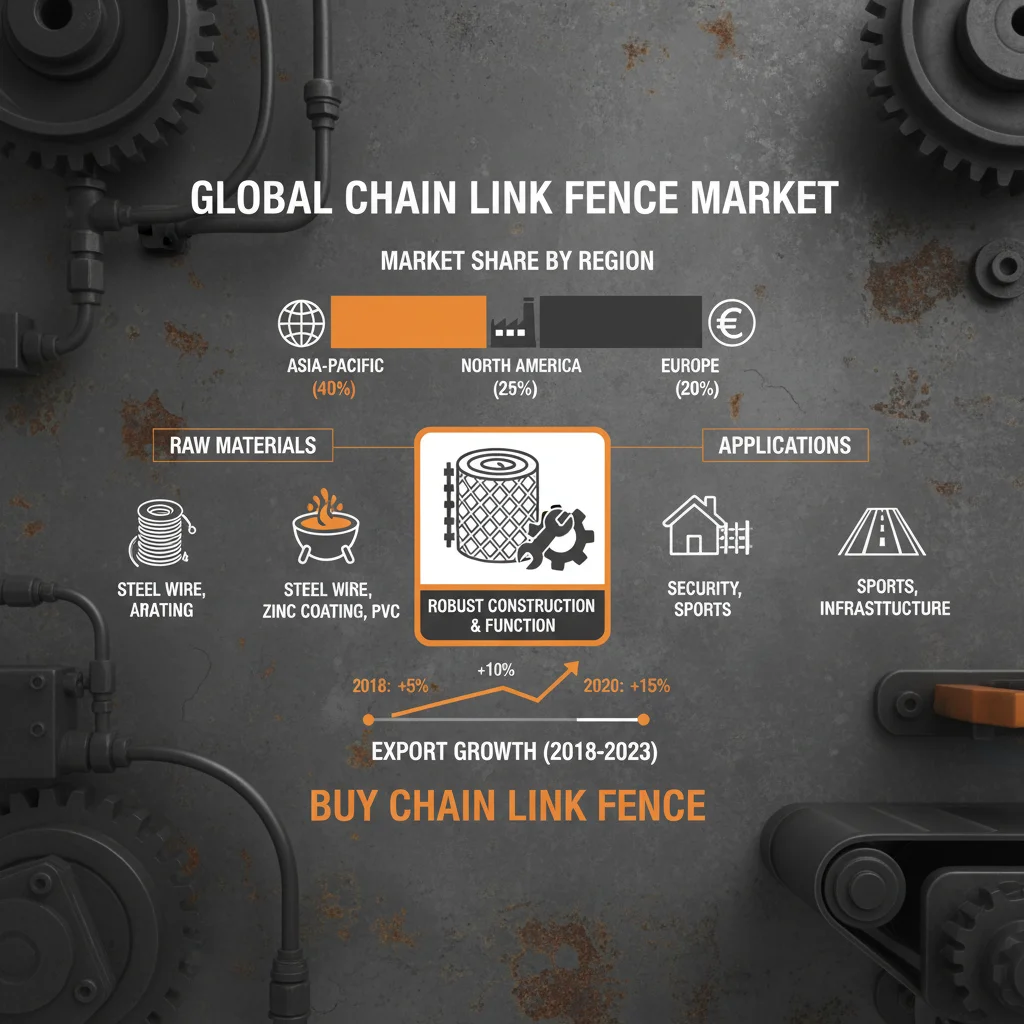
The implementation of a high-quality chain fence link system is fundamental to modern perimeter security and asset management across various industrial sectors. Whether it is securing a sprawling livestock facility or delineating the boundaries of a heavy-duty construction site, the structural integrity of the weaving process determines the overall longevity and effectiveness of the barrier. Understanding the nuances of wire gauge and coating technologies allows project managers to balance budget constraints with the necessity of long-term durability.
Globally, the demand for robust fencing solutions has surged as industrialization expands into more corrosive environments and remote terrains. The versatility of the chain fence link makes it an indispensable tool for those requiring a transparent yet formidable physical boundary. By integrating advanced metallurgy with precision engineering, modern manufacturers are now providing solutions that resist oxidation and mechanical fatigue far better than traditional predecessors.
Investing in the right materials is not merely about preventing unauthorized access; it is about optimizing operational safety and reducing maintenance overheads. This guide explores the technical specifications, global applications, and future innovations surrounding the chain fence link, providing a comprehensive roadmap for engineers, farmers, and industrial planners to make informed procurement decisions.
Global Relevance of Chain Fence Link Systems
On a global scale, the standardization of the chain fence link has been driven by the need for rapid deployment and scalable security. From the expansive agricultural zones in North America to the dense industrial hubs of Southeast Asia, the reliance on diamond-mesh weaving allows for a balance between visibility and strength. According to industrial logistics trends, the ability to quickly transport and install these systems makes them the primary choice for temporary site security and permanent boundary markers alike.
The challenge often lies in the diverse environmental stresses these links must endure. In coastal regions, salt-spray corrosion can degrade standard steel in a matter of months, whereas in arid mining zones, abrasive dust and extreme temperature fluctuations test the tensile strength of the wire. Consequently, the evolution of the chain fence link has shifted toward specialized coatings and high-carbon alloys to meet these varying ISO-compliant durability standards.
Defining the Mechanics of Chain Fence Link
At its most basic level, a chain fence link is a series of interwoven wires that create a flexible, yet rigid, fabric. Unlike welded wire mesh, which uses fixed points of fusion, the chain-link structure relies on the mechanical interlocking of zig-zagged wires. This design allows the fence to absorb impacts and shift slightly under pressure without catastrophic failure, making it ideal for high-traffic industrial zones.
In the context of modern industry, this "interlocked" nature serves a vital humanitarian and commercial purpose. It provides a non-opaque barrier, which is critical for surveillance and safety monitoring. For instance, in livestock management, the ability to monitor animal health from a distance while maintaining a secure perimeter is a direct benefit of the open-weave geometry inherent in the chain fence link design.
Furthermore, the manufacturing process—typically involving automated weaving machines—ensures that each link is uniform in size and strength. This precision is what allows for the seamless integration of tension wires and rails, transforming a flexible roll of wire into a rigid architectural asset. The synergy between the raw material quality and the weaving precision defines the professional grade of the finished product.
Core Components for Maximum Durability
The longevity of a chain fence link system is primarily dictated by its material composition. Galvanized steel remains the industry standard, where a zinc coating acts as a sacrificial anode to protect the underlying steel from oxidation. The thickness of this coating, often measured in ounces per square foot, directly correlates to the years of service life the fence will provide in humid environments.
Beyond the raw metal, the gauge of the chain fence link is a critical factor. A lower gauge number indicates a thicker wire, which increases the fence's resistance to cutting and physical impact. For high-security industrial applications, heavy-gauge wire is paired with PVC or powder coatings, which provide an additional chemical barrier against pollutants and acid rain, ensuring the structure does not succumb to premature corrosion.
Finally, the tensioning components—including tension bars and bands—ensure that the chain fence link remains taut. A sagging fence not only looks unprofessional but also creates vulnerabilities that can be easily exploited. By utilizing high-tensile strength alloys for these supporting elements, the overall system maintains its structural geometry even under the weight of climbing vines or accidental impacts from machinery.
Industrial Applications and Global Use Cases
The application of chain fence link technology spans an incredibly wide array of sectors. In the agricultural heartlands of Brazil and the US, these fences are used to contain livestock and protect crops from wildlife, where the flexibility of the mesh allows it to follow the natural contours of the land. Meanwhile, in the mining sectors of Australia and Canada, heavy-duty chain links are deployed to secure hazardous zones, preventing unauthorized personnel from entering volatile blast areas.
In urban infrastructure, such as sports complexes and municipal parks, the chain fence link is favored for its ability to withstand high-velocity impacts from balls or equipment while remaining visually unobtrusive. In post-disaster relief operations, rapid-deploy chain-link fencing is often used by NGOs and government agencies to create temporary secure zones for aid distribution and medical triage, proving that the simplicity of the link design is its greatest strength.
Comparative Performance of Chain Fence Link Material Options
Long-Term Value and Economic Advantages
From a financial perspective, the chain fence link offers one of the lowest total costs of ownership (TCO) among all fencing types. The initial installation is relatively fast, reducing labor costs, and the modular nature of the links means that damaged sections can be repaired locally without needing to replace the entire span. This localized maintenance capability saves companies thousands of dollars in operational downtime.
Beyond the balance sheet, there is an intangible value rooted in trust and safety. A well-maintained chain fence link perimeter signals a professional approach to security, deterring opportunistic theft and ensuring that employees and livestock are kept safe from external hazards. The reliability of the material provides peace of mind, allowing owners to focus on their core business rather than constant boundary repairs.
Future Trends in Fencing Material Science
The future of the chain fence link is being shaped by the intersection of sustainability and smart technology. We are seeing a rise in the use of recycled steel and eco-friendly coatings that eliminate Volatile Organic Compounds (VOCs). As global regulations on carbon footprints tighten, the transition toward "green steel" in fence manufacturing is becoming a priority for large-scale industrial procurement.
Additionally, the integration of sensor technology is transforming the passive chain fence link into an active security system. Fiber-optic cables are now being woven directly into the mesh, allowing security teams to detect the exact location of a breach through vibration analysis. This fusion of mechanical strength and digital intelligence represents the next frontier in perimeter protection.
Automation in the weaving process is also increasing the consistency of the product. AI-driven quality control systems can now detect microscopic flaws in the wire gauge during the weaving of the chain fence link, ensuring that every roll delivered to the customer meets exact tensile specifications, thereby eliminating weak points in the final installation.
Overcoming Common Implementation Challenges
One of the most frequent challenges in deploying a chain fence link system is the "sagging" effect over time. This is often caused by improper tensioning during the initial installation or the use of undersized tension bars. The expert solution is to implement a rigorous tensioning schedule and utilize high-grade adjustable stretchers that can be tightened as the metal naturally settles.
Another common issue is localized corrosion at the points where the chain fence link is cut or joined. These exposed edges are susceptible to moisture. To overcome this, professionals recommend using cold-galvanizing sprays or protective caps on all cut ends, effectively sealing the steel from the elements and extending the life of the joint.
Finally, navigating the balance between cost and security often leads to the selection of inappropriate wire gauges. The solution lies in a "zonal security" approach: using heavy-duty, thick-gauge chain fence link for high-risk areas (like equipment storage) and standard-gauge links for low-risk perimeters. This optimizes the budget without compromising the integrity of the most critical zones.
Analysis of Chain Fence Link Technical Specifications by Application
|
Application Area
|
Recommended Wire Gauge
|
Preferred Coating
|
Expected Lifespan (Yrs)
|
| Livestock Farming |
11-12.5 Gauge |
Galvanized |
15-20 |
| Industrial Warehouse |
9 Gauge |
PVC Coated |
25-30 |
| Coastal Infrastructure |
9-11 Gauge |
Stainless Steel |
40+ |
| Construction Site |
12.5 Gauge |
Standard Galv |
5-10 |
| High-Security Facility |
6-9 Gauge |
Powder Coated |
30+ |
| Municipal Parks |
11 Gauge |
Vinyl Coated |
20-25 |
FAQS
For high-salt or coastal environments, stainless steel or heavy-duty PVC-coated galvanized wire is highly recommended. Stainless steel offers the highest inherent resistance to chloride-induced corrosion, while PVC provides a thick plastic barrier that prevents saltwater from reaching the metal core, significantly extending the lifespan of the fence link.
The choice depends on the required security level. For residential or light agricultural use, 11 or 12.5 gauge is usually sufficient. For industrial perimeters where physical strength and resistance to cutting are priorities, a 9 gauge or even 6 gauge wire is preferred to ensure the fence cannot be easily breached.
Yes, one of the primary advantages of the chain-link design is its flexibility. The woven mesh can be draped over slopes and uneven ground more easily than rigid panel fencing. By adjusting the post height and using a flexible top rail or tension wire, you can maintain a consistent boundary regardless of the topography.
It is recommended to inspect the tension every 12 to 24 months, especially after extreme weather events or in areas with shifting soil. Checking the tension bars and tightening the stretchers ensures that the mesh does not sag, which maintains both the aesthetic appeal and the security effectiveness of the system.
PVC coating adds an extra layer of protection over the galvanized steel, making it more resistant to moisture and chemicals. While galvanization provides the primary anodic protection, the PVC layer prevents the zinc from wearing down. However, if the PVC is punctured, moisture can trap underneath, so high-quality, seamless coating is essential.
Rust typically starts at the cut ends where the protective coating is removed. To prevent this, you should apply a cold-galvanizing zinc-rich paint to the exposed edges immediately after cutting. Additionally, using professional end-caps or tying the ends securely to tension bars can minimize the surface area exposed to the air.
Conclusion
In summary, the chain fence link remains a cornerstone of global industrial and agricultural infrastructure due to its unparalleled versatility, cost-effectiveness, and structural resilience. By carefully selecting the appropriate wire gauge and protective coating, users can create a boundary that not only secures assets but also withstands the harshest environmental challenges. The transition toward smart sensing and sustainable materials ensures that this traditional solution will remain relevant in the digital age.
For those planning new installations or upgrading existing perimeters, the focus should remain on the synergy between material quality and installation precision. Investing in professional-grade links today prevents costly replacements tomorrow and provides a reliable foundation for site safety and security. To explore high-performance fencing solutions tailored to your specific industry needs, we invite you to visit our website: www.cowanfences.com.