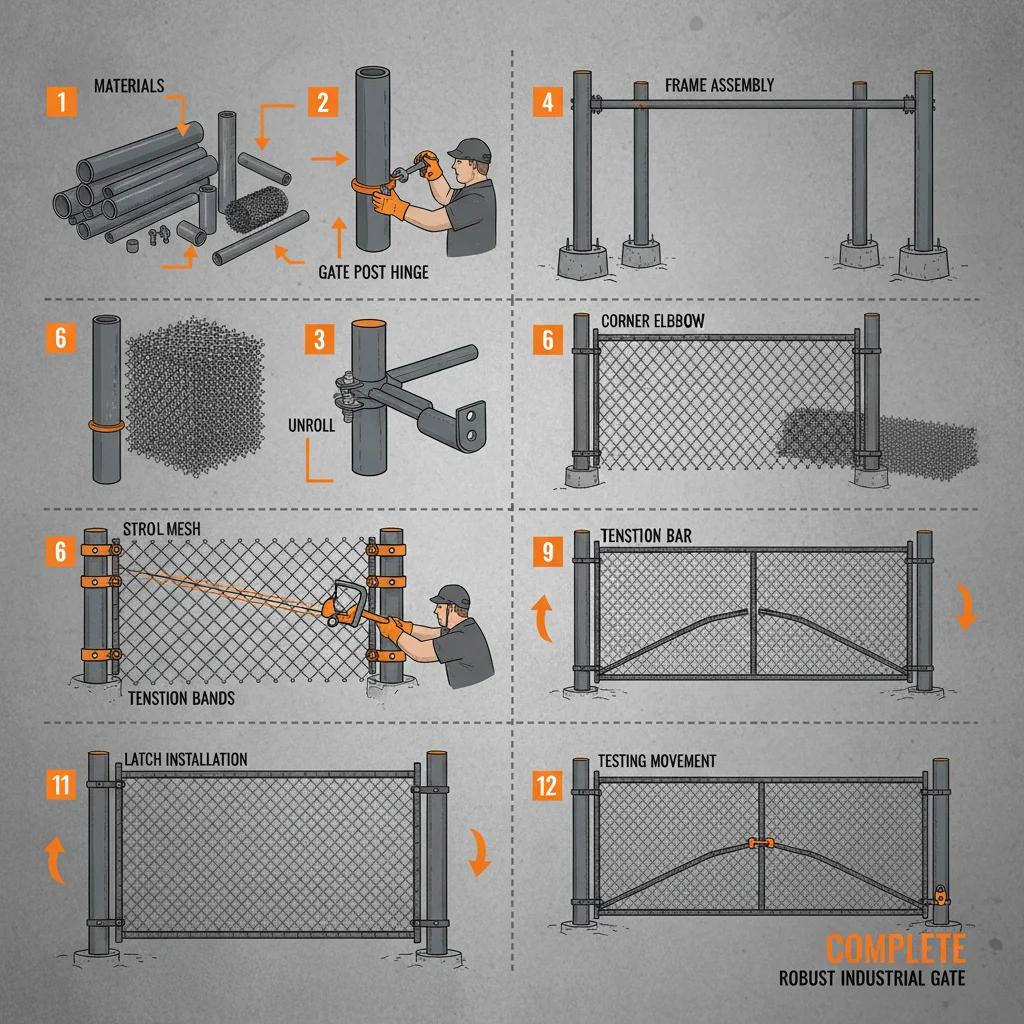
In the modern industrial landscape, maintaining a safe and organized environment is paramount for operational continuity. The implementation of a robust steel defensive barrier, often sought after as a specialized chain link fence enclosure alternative for high-impact zones, ensures that critical assets and personnel are shielded from the inherent risks of heavy machinery. By establishing rigid physical boundaries, facilities can drastically reduce the frequency of workplace accidents and equipment damage.
Across global logistics and manufacturing hubs, the demand for professional-grade safety solutions has surged as companies strive to meet rigorous ISO and industrial safety standards. These heavy-duty systems are engineered to withstand the immense force of forklift collisions and pallet jack impacts, which are common occurrences in high-traffic warehouse zones. Without such protective measures, the risk of costly downtime and personnel injury increases exponentially.
Investing in a high-strength industrial steel system provides more than just a physical wall; it offers a strategic approach to traffic regulation and hazard mitigation. Whether utilized as a perimeter guard or a custom internal partition, a chain link fence enclosure style protective system optimizes workflow by clearly delineating pedestrian walkways from vehicle lanes, thereby fostering a culture of safety and efficiency.

Global Relevance of Industrial Safety Barriers
On a global scale, the integration of heavy-duty steel barriers is no longer optional but a necessity for compliance with international health and safety regulations. In regions with massive industrial growth, such as East Asia and North America, the scale of logistics centers has increased, leading to higher traffic densities of industrial vehicles. The use of a chain link fence enclosure or reinforced steel barrier is essential to prevent high-energy collisions that can lead to structural failure of the building or severe injury.
Furthermore, the economic impact of equipment downtime due to accidental collisions is staggering. By implementing reinforced posts and panels, factories can safeguard high-value machinery, ensuring that a single forklift error does not result in weeks of lost production. This global shift toward preventive safety infrastructure highlights the critical role of durable, industrial-grade shielding in sustaining modern supply chains.
Definition and Structural Engineering
A steel defensive barrier is a professional-grade safety solution engineered specifically for the protection of personnel and assets in demanding industrial environments. Unlike a standard chain link fence enclosure which may be used for general perimeter security, these defensive systems are built from high-strength industrial steel designed to absorb and deflect significant kinetic energy from heavy machinery.
The structural integrity of these barriers relies on a combination of reinforced steel posts and heavy-duty panels. To ensure longevity in harsh environments, the materials undergo professional-grade surface treatments, including powder coating or galvanization. This prevents rust and chemical corrosion, making the system suitable for both indoor warehouses and outdoor industrial yards.
From an engineering perspective, the system is designed for versatility. The modular configuration allows for linear, perimeter, or custom layouts, while the floor-anchored installation ensures that the barrier remains stable during a high-impact event. This combination of rigidity and flexibility makes it the gold standard for industrial hazard mitigation.
Core Components for Maximum Impact Resistance
The effectiveness of a protective system, such as a chain link fence enclosure or a steel barrier, depends on its primary material grade. High-strength industrial steel is used to ensure that the barrier does not collapse upon impact, instead absorbing the energy to protect the assets behind it.
Surface treatment is another critical component. By utilizing galvanization or powder coating, the chain link fence enclosure alternative maintains its structural integrity against humidity, industrial chemicals, and outdoor weathering, significantly reducing the need for frequent replacements.
Finally, visibility and modularity play key roles in operational safety. High-visibility colors and reflective panels ensure that drivers are aware of the boundaries even in low-light conditions, while the modular design allows the system to be reconfigured as the warehouse layout evolves.
Practical Applications in Industrial Zones
In real-world applications, these barriers are deployed across a variety of high-risk scenarios. For instance, in logistics centers, they are used to create dedicated pedestrian walkways, physically separating humans from the path of forklifts. This application transforms a chaotic floor into a streamlined environment where traffic patterns are clearly defined and risks are minimized.
Additionally, they are indispensable for asset protection around critical machinery and inventory. By creating a secure chain link fence enclosure style boundary around expensive CNC machines or hazardous chemical storage, facilities prevent accidental vehicle impact and unauthorized access, ensuring both safety and security.
Comparison of Protective System Effectiveness
Long-Term Economic and Operational Value
The financial logic behind installing a heavy-duty chain link fence enclosure or steel barrier system is found in the reduction of long-term liability and repair costs. When comparing a facility without barriers to one with them, the difference in accident rates is dramatic. By preventing a single major forklift collision with a primary production machine, the system often pays for itself instantly.
Beyond direct cost savings, these systems enhance operational efficiency. Clearly defined storage zones and pedestrian paths maximize the use of available floor space and reduce congestion. This organizational clarity allows for faster material handling and a more predictable workflow, which directly translates to higher productivity and employee morale.
Future Trends in Facility Protection
Looking ahead, the evolution of industrial safety is moving toward "smart" barriers. Integration with IoT sensors can allow a chain link fence enclosure or steel barrier to detect an impact in real-time and automatically notify facility managers, allowing for immediate damage assessment and replacement of the modular component.
Sustainability is also becoming a key driver in manufacturing. The shift toward recyclable high-strength alloys and eco-friendly powder coatings ensures that safety infrastructure does not come at an environmental cost. This align with global ESG (Environmental, Social, and Governance) goals, making the facility more attractive to investors and compliant with green building certifications.
Finally, we are seeing a trend toward increased modularity and "rapid-deployment" systems. As warehouses move toward more flexible, agile layouts to accommodate e-commerce demands, the ability to relocate and reconfigure defensive barriers without damaging the concrete floor will become a critical competitive advantage.
Overcoming Implementation Challenges
One of the most common challenges in implementing a chain link fence enclosure or steel barrier is the initial disruption to workflow during installation. To overcome this, many facilities are adopting phased installation schedules, where high-risk zones are secured first, followed by lower-priority areas, ensuring that production never grinds to a complete halt.
Another limitation is the rigidity of traditional installations. However, the shift toward modular, floor-anchored systems solves this problem. Instead of permanent walls, these modular components can be swapped out individually if damaged, ensuring that the overall system remains effective without requiring a full replacement of the entire line.
Lastly, balancing visibility with aesthetics can be a concern for some managers. The solution lies in the use of high-visibility coatings that are not only functional for safety but also professional in appearance, blending the need for "warning" signals with the corporate image of a clean, well-managed facility.
Comprehensive Analysis of Industrial Barrier Performance
| Barrier Material |
Impact Rating |
Corrosion Resistance |
Maintenance Level |
| Standard Steel |
6/10 |
Moderate |
Medium |
| Galvanized Steel |
8/10 |
High |
Low |
| Powder Coated Steel |
8/10 |
Very High |
Low |
| Reinforced Alloy |
10/10 |
High |
Very Low |
| Composite Shield |
7/10 |
Immune |
Low |
| Hybrid Modular |
9/10 |
High |
Very Low |
FAQS
These barriers are constructed from high-quality, heavy-duty reinforced steel, specifically engineered to withstand significant impacts from forklifts and other industrial machinery. This ensures that the barrier remains standing and protective even after a high-energy collision.
The steel is treated with professional-grade powder coating or galvanization. This process creates a robust protective layer that prevents rust and oxidation, ensuring the structure's longevity even in humid warehouses or outdoor settings exposed to the elements.
Yes, the modular design allows for extreme flexibility. Individual sections can be disconnected and relocated or reconfigured. This means as your production needs grow or your storage zones move, the barriers can be adapted without needing a completely new system.
Absolutely. By establishing a physical separation between pedestrian zones and hazardous machinery, these barriers help facilities demonstrate adherence to strict industrial health and safety regulations, potentially reducing insurance liability and passing safety audits.
The barriers are securely anchored to concrete floors using standard heavy-duty fasteners. This ensures they remain stable and do not shift or slide when subjected to the force of a forklift or pallet jack collision.
Thanks to the modular construction, you do not need to replace the entire system. Only the specific damaged component or panel can be replaced. This makes the upkeep highly cost-effective and reduces the downtime associated with repairs.
Conclusion
Implementing a professional-grade steel defensive barrier, whether as a specialized chain link fence enclosure or a reinforced post system, is a critical investment in industrial safety. By combining high-strength materials with corrosion-resistant finishes and modular flexibility, facilities can effectively mitigate risks, protect high-value assets, and ensure the safety of their personnel. The long-term benefits in reduced downtime and operational efficiency far outweigh the initial installation costs.
As industrial environments continue to evolve toward greater automation and higher traffic volumes, the necessity for rigid, reliable boundaries will only grow. We recommend that facility managers conduct a thorough risk assessment of their high-traffic zones and implement modular shielding to stay ahead of safety requirements. For more information on securing your facility with professional industrial barriers, visit our website: www.cowanfences.com.